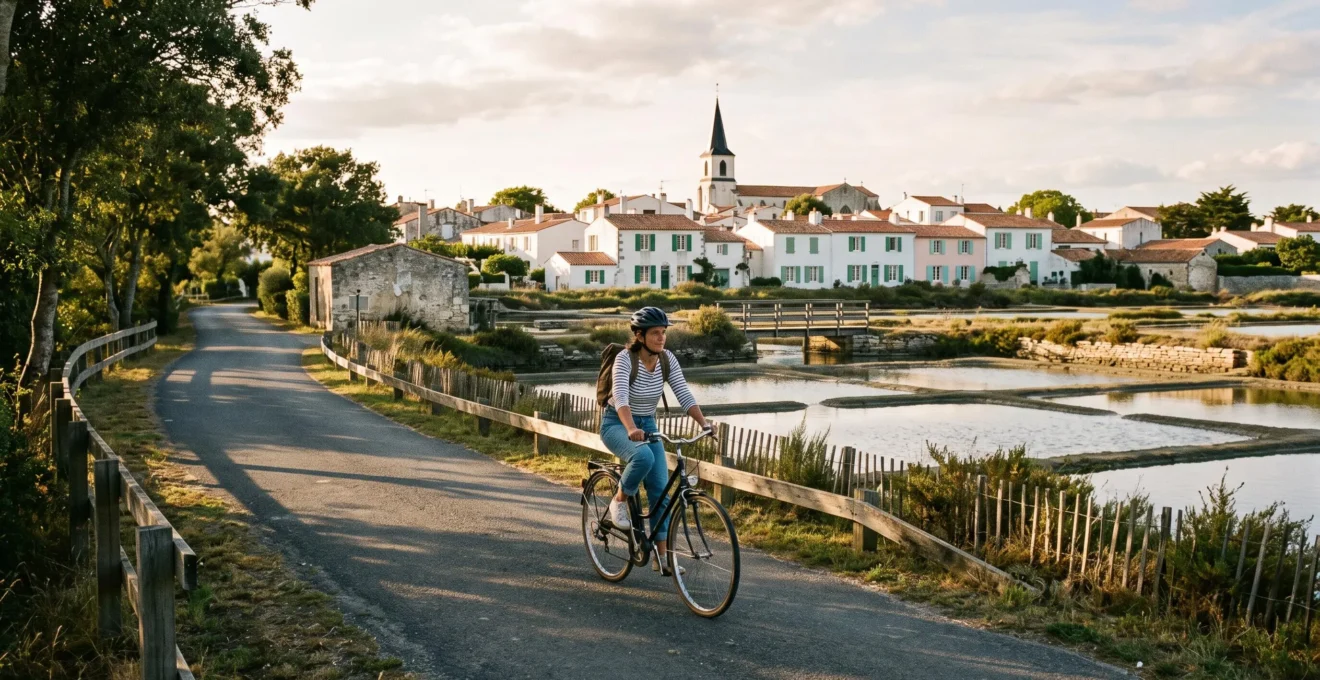
If you are wondering what makes Île de Ré special, the short answer is: it feels like a lived-in island rather than a built-up resort. You get a compact mix of whitewashed villages, salt marsh landscapes, and a strong bike culture that makes moving between beaches, markets, and nature areas part of the experience—not a logistical chore.
It can still be touristy in summer, so the “special” part is not about avoiding visitors entirely. It is about how the island’s heritage (villages, marshes, harbors) remains visible and easy to access, especially if you plan your days around early mornings, cycling routes, and quieter seasons.
If you only remember three things about Île de Ré
- Villages matter: the island’s character is largely village-based (markets, small streets, harbors), not just beach-front development.
- Salt marshes shape the scenery: they create the island’s signature flat horizons, reflections, and birdlife areas.
- Bike travel is the “default” pace: it is often the easiest way to connect villages, coasts, and marshes in one day.
What Makes Île de Ré So Special?
Réponse directe : Île de Ré stands out for its preserved villages, salt-marsh scenery, and the fact that you can experience most of it comfortably by bike—creating a slower, more local-feeling coastal break than many car-centric seaside destinations.
Geographically, Île de Ré is a French island on the Atlantic coast, in Charente-Maritime. It is connected to the mainland, which makes it easier to reach than many islands that require a boat—while still feeling distinctly “island-like” once you are on it.
Compared with larger seaside resorts where activities are concentrated around a single beachfront strip, Île de Ré tends to spread its interest points across multiple villages and landscapes. That dispersion is what often reduces the “overrated” feeling: your days can include a market in one village, marsh scenery a few kilometers later, and a quieter beach further on—without needing a long drive.
Another difference is pace. If you choose to explore by bicycle, distances feel human-scale, and the journey becomes part of the memory: pedaling past hedges, channels, and salt pans, then arriving directly into a small harbor or a village square.
Why Are the Villages the Heart of the Island’s Charm?
The villages are central because they carry most of what you “see” and “do” day to day: markets, small harbors, cafés, church squares, and the island’s recognizable residential architecture. Instead of a single resort center, you get several village hubs—each with a slightly different atmosphere.
Visually, many streets are defined by a simple palette: white walls, green shutters, and narrow lanes softened by gardens and climbing flowers. This is one of the reasons first-time visitors often feel the island is “coherent” and easy to enjoy without chasing must-see attractions.
To make this concrete, imagine two typical stops on the same day. In one village, you might start with a morning market and a harbor walk; in another, you end the afternoon in quieter residential streets before reaching a coastal path. The shift between “lively” and “calm” can happen over just a few kilometers, which is rare in more linear beach destinations.
If you want help choosing where to focus (without trying to cover everything), this internal resource can be a practical next step: village guide.
Landscapes, Salt Marshes and Coastal Scenery
Île de Ré is not only beaches. Its most distinctive landscape is the marais salants (salt marshes), with long straight lines, shallow basins, and big skies. Even if you do not tour a working salt area, just passing through the marsh scenery by bike or on foot can be a highlight because the views change with light, tide, and season.
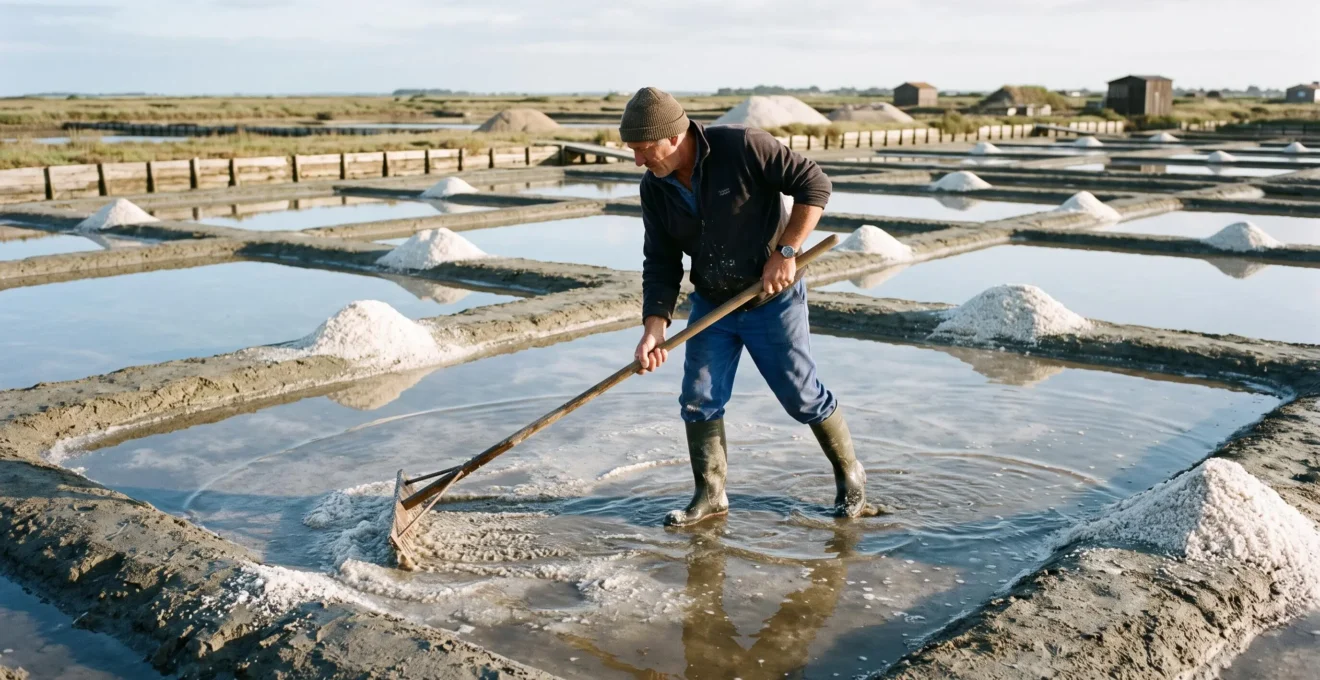
Alongside the marshes, the island also offers classic Atlantic coast scenery: beaches, dunes, and wooded stretches (often associated with pine groves in this part of the coast). What makes the combination feel special is proximity: you can move from a quiet marsh channel to an open beach atmosphere in a short ride.
If you are comparing destinations, this is a useful lens: some places do “beach life” very well, others do “nature reserves” very well. Île de Ré is often appreciated because it layers several coastal moods—village life, marsh geometry, and ocean-front—into one compact trip.
For many travellers, birdwatching is part of the marsh appeal, but it is also fine to keep it simple: go at a time of day when light is soft, pause on a bridge or a path edge, and you will quickly understand why the flat landscape feels calm rather than empty.
Exploring the Island by Bike
Can you explore Île de Ré by bike easily? In practice, many visitors find cycling is the most straightforward way to connect villages and landscapes at the island’s natural pace—especially because the terrain is generally flat and routes often avoid heavy traffic.
This is also where the island can feel less “touristy” than expected: even in busy periods, you can often regain a quieter atmosphere by leaving a crowded spot and riding a few minutes toward marsh paths or less central lanes.
Main cycling routes
Rather than thinking in “one perfect loop,” it helps to plan cycling days around simple links: village-to-village, village-to-marsh, then marsh-to-coast. The best route for you depends on where you stay, but the overall logic stays the same: build a day where stops are naturally spaced for a café break, a market, and a viewpoint.
A practical way to choose is to anchor your ride to one “lively” stop (a harbor or market village) and one “quiet” stop (a marsh path or a less built-up coastline). That mix usually delivers the island’s signature contrast without trying to do too much.
Best seasons and practical tips
If you are worried the island might be “too touristy,” season matters as much as destination choice. Outside peak summer weeks, cycling can feel calmer and more spacious, while still giving you access to markets, villages, and coastal scenery. In high season, the same routes can remain enjoyable if you ride earlier in the day and avoid trying to cross the island at the most crowded hours.
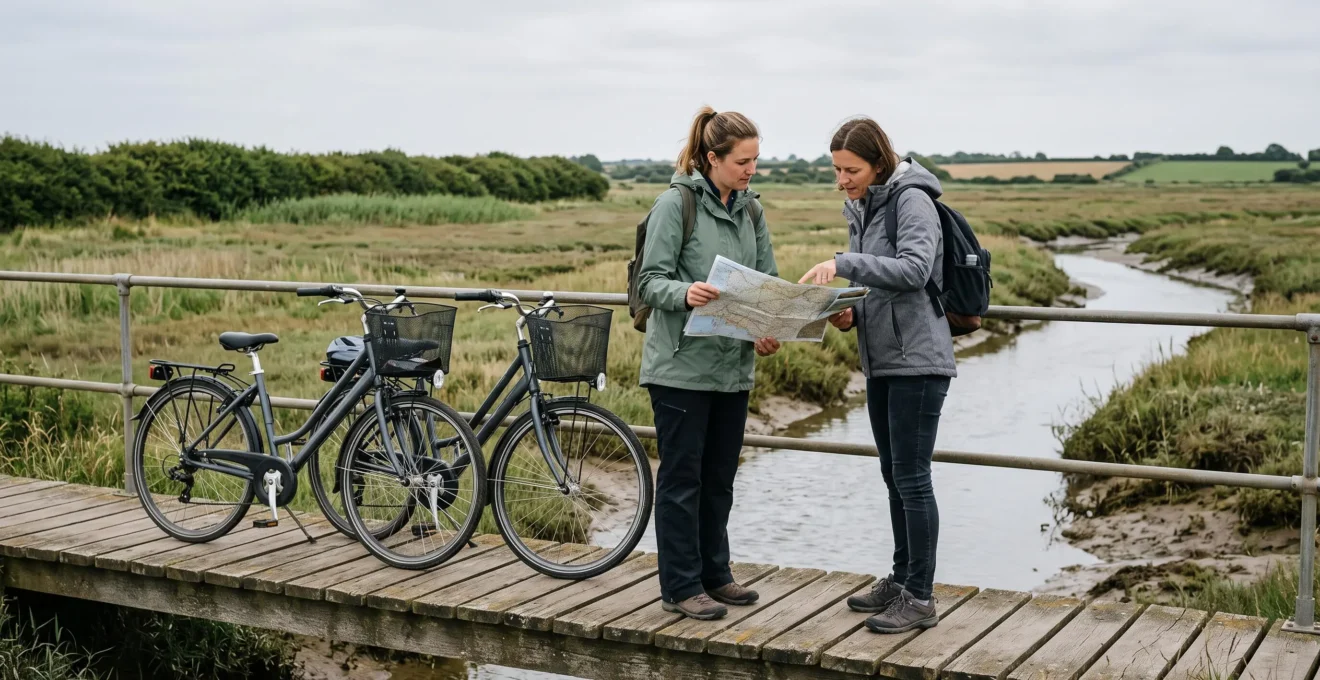
For a first trip, think in simple, low-risk planning steps: choose a base village, map two or three short rides, and keep one day flexible for weather. Renting a bike locally is common, but availability and opening hours vary by season—so it is worth checking practical details once you know your dates.
What can make cycling feel harder than expected : Summer heat, wind exposure on open stretches, and limited shade in marsh areas can turn a “short” ride into a tiring one if you start at midday without water.
Planning Your Visit to Île de Ré
Is Île de Ré worth visiting despite being touristy? It can be—if what you want is not “no crowds,” but a coastal destination where you can still find everyday village life and calmer landscapes a few kilometers away. The island tends to suit travellers who value atmosphere (markets, harbors, marsh light) and who are happy moving around by bike or at a slower rhythm.
For a short weekend trip, your experience will be better if you narrow the scope: one or two villages, one marsh-focused ride, and one beach or coastal walk. Trying to “tick off” the whole island in two days can make it feel more crowded and less distinctive than it actually is.
For a longer stay, the most reliable way to avoid disappointment is to plan variety on purpose: alternate village time with nature time. A hypothetical example: one morning market and harbor stroll, then an afternoon ride through salt marsh paths; the next day, pick a different village for a new feel, then end with a beach at a quieter hour.
If you are weighing Île de Ré against other French coastal islands for a first visit, a simple comparison point is this: Île de Ré is often chosen for the village-and-bike experience as much as for the sea itself. If that sounds like your idea of a memorable break, you are likely to “get” what makes it special.
Once you have dates in mind, your next practical step is to pick a base village and sketch two cycling days: one oriented around villages and harbors, the other around marshes and open coastline. That is usually enough to decide—quickly and without overplanning—whether Île de Ré fits what you are looking for.
Is Île de Ré worth visiting outside the summer season?
Often yes if your priority is atmosphere and cycling comfort rather than guaranteed beach weather. Outside peak summer, villages and marsh paths can feel calmer, and it is easier to experience the island at a slower pace.
Is Île de Ré suitable for a short weekend trip?
Yes, as long as you keep your plan simple: choose one base area, do one village-focused outing and one nature-focused outing (salt marshes or coast). Packing in too many stops can make the weekend feel rushed.
Is Île de Ré too touristy?
It can be busy in summer, especially in the most popular villages and beach access points. Many travellers still enjoy it because you can often find quieter scenery quickly by cycling toward marsh areas or by adjusting your schedule (early mornings, late afternoons).
Can you explore Île de Ré by bike easily?
Many visitors find it easy because routes tend to be flat and cycling matches the island’s scale. The main challenges are wind, sun exposure, and planning water and timing—more than technical difficulty.