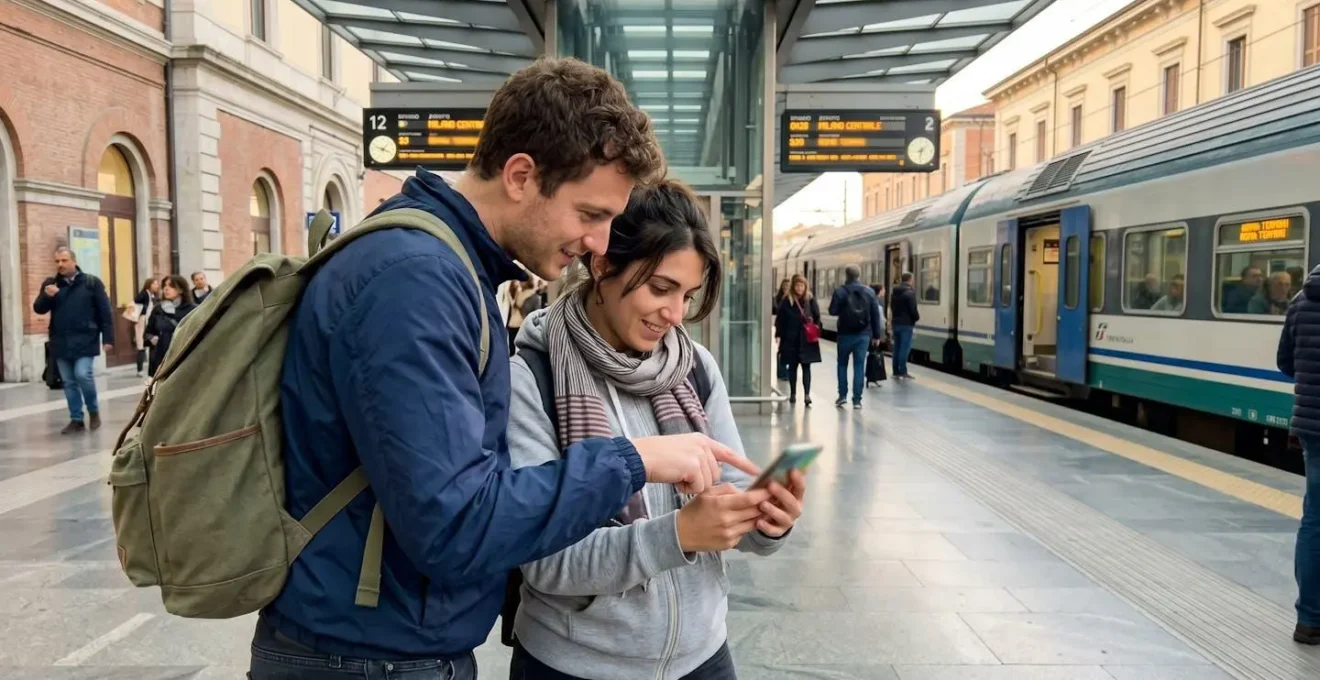
Tuscany‘s three iconic cities—Florence, Pisa, and Lucca—sit within 85 kilometers of each other, making multi-city exploration a realistic goal for travelers with limited time. According to the latest ISTAT tourist flow data, foreign visitors accounted for over 250 million overnight stays in Italy during 2024, with Tuscany ranking among the top regions for domestic and international tourism. Yet most first-time visitors struggle with a fundamental question: which transportation option maximizes sightseeing time without draining the budget or adding logistical headaches?
The conventional advice—take regional trains—ignores critical factors that emerge only after you’ve dragged luggage across Florence’s Santa Maria Novella station platforms or waited 40 minutes for a connection that runs every two hours. This guide compares four realistic transportation methods across six decision-making criteria: total cost (including hidden expenses), actual travel time (door-to-door, not just seat time), booking complexity, luggage handling, route flexibility, and cultural enrichment value. The analysis draws on current pricing, real-world traveler pain points, and route efficiency data to match each option with specific traveler profiles.
Your 60-second transportation decision guide
- Tootbus intercity passes: Best for 2–3 day multi-city trips with integrated audio guides and flexible hop-on boarding at central stops
- Trenitalia regional trains: Fastest for single Florence-Pisa routes, less flexible for Lucca connections requiring transfers
- Rental cars: Ideal for countryside detours and family groups, requires International Driving Permit and parking budget
- Organized day tours: Zero-planning convenience with fixed itineraries, highest per-person cost
What to consider when choosing transportation for Florence, Pisa & Lucca
The decision between trains, buses, rental cars, and guided tours hinges on six factors that rarely appear in standard travel guides. Most comparison articles fixate on ticket prices and published timetables, overlooking the operational realities that determine whether you spend your afternoon exploring Lucca’s medieval walls or waiting on a Pisa Centrale platform.
The most overlooked factor is total cost transparency. A €8.90 train ticket looks economical until you add the €12–15 taxi ride from Pisa Centrale station to the Leaning Tower (1.5 kilometers with luggage), plus the return trip. For a couple making the Florence-Pisa-Lucca circuit over two days, these «last-mile» transfers can add €50–70 to the advertised transportation cost. Multi-day bus passes with stops directly at tourist centers eliminate this hidden expense, though the upfront pass price appears higher at first glance.
Travel time calculations must account for the complete door-to-door experience. Regional trains between Florence and Pisa run frequently and complete the journey in approximately 50–60 minutes of seat time. Yet the realistic timeline includes platform navigation, buffer time for ticket validation, the train journey itself, then getting from Pisa Centrale to the tourist zone. Total elapsed time often exceeds 100 minutes, which changes the efficiency equation significantly.
Booking complexity and language barriers surface at ticket counters, automated kiosks with Italian-only interfaces, and during platform changes. Luggage handling and accessibility constraints shape daily logistics—Florence SMN station has limited elevator access between certain platforms. Route flexibility determines whether you can extend a Lucca visit by two hours if the city captivates you, or whether you’re locked into a pre-purchased departure. Cultural enrichment value separates pure transportation from experiential learning, particularly valuable for first-time visitors building mental maps of Tuscany’s cultural landscape.
The four main ways to travel between these cities
The transportation market for the Florence-Pisa-Lucca triangle divides into four distinct categories, each optimized for different traveler priorities. Understanding the structural differences between these options clarifies why blanket recommendations fail to serve the 54.6% of international tourists who, according to ISTAT’s December 2025 tourism impact report, now account for the majority of Italy’s 458.4 million annual overnight stays.
| Transportation Method | Cost Range (2 people, 2 days) | Florence-Pisa Time | Booking Complexity | Luggage-Friendly | Schedule Flexibility | Cultural Value |
|---|---|---|---|---|---|---|
| Tootbus Intercity Pass | €70–90 (estimated multi-day pass) | ~75 min direct routes | Simple (app-based) | ✓ Ground-level, dedicated space | ✓ Hop-on validity | ✓✓ Audio guides + Tootwalk |
| Trenitalia Regional Trains | €50–70 (tickets + taxis) | ~50 min (seat time only) | Moderate (ticket machines) | ⚠ Platform stairs, limited storage | ⚠ Fixed departures | — Transport only |
| Rental Car (Compact) | €120–180 (rental + fuel + parking) | ~60 min (direct drive) | Complex (IDP, insurance, navigation) | ✓✓ Full trunk access | ✓✓ Complete freedom | — Self-guided only |
| Organized Day Tours | €160–240 (€80–120/person) | Full-day commitment | Simple (book online) | ⚠ Limited to small bags | ✗ Fixed group itinerary | ✓ Live guide (group setting) |
Pricing data collected and updated January 2026. Train fares sourced from Trenitalia official schedules; car rental estimates based on AutoEurope aggregator data for compact automatic vehicles; tour pricing from major operator averages.
Tootbus operates dedicated intercity coach services connecting Florence, Pisa, and Lucca via the Green Route, alongside a separate Terracotta Route serving Florence, San Gimignano, and Siena. The service positions itself between traditional point-to-point transportation and guided tours, offering hop-on hop-off flexibility during the pass validity period (available in 2-day, 3-day, and 5-day options).
The operational model activates upon first scan, meaning a 2-day pass purchased Monday but first used Wednesday remains valid through Thursday. Buses feature onboard WiFi, wheelchair accessibility, and multilingual audio commentary covering regional history and cultural context during transit. The integrated mobile app provides real-time bus tracking, digital ticketing, and access to Tootwalk pedestrian audio tours in each city—self-guided walking routes created by local Tootbus teams and included at no additional charge.
The service distinguishes itself through Tootie, an AI-powered travel assistant supporting 50+ languages and capable of answering route questions, recommending attractions, and troubleshooting booking issues via text or voice interface. For travelers concerned about language barriers or unfamiliar with Italian transportation systems, this feature reduces cognitive load significantly compared to navigating automated ticket kiosks in stations.
- Flat-rate multi-day pricing eliminates per-journey ticket purchases
- Audio guides and Tootwalk add educational value during transit and exploration
- Ground-level boarding and dedicated luggage compartments reduce accessibility friction
- Fixed routes — no countryside detours to Tuscan hill towns off the Green Route
- Frequency typically lower than high-volume train routes during peak hours
- Multi-day pass only economical if visiting all three cities
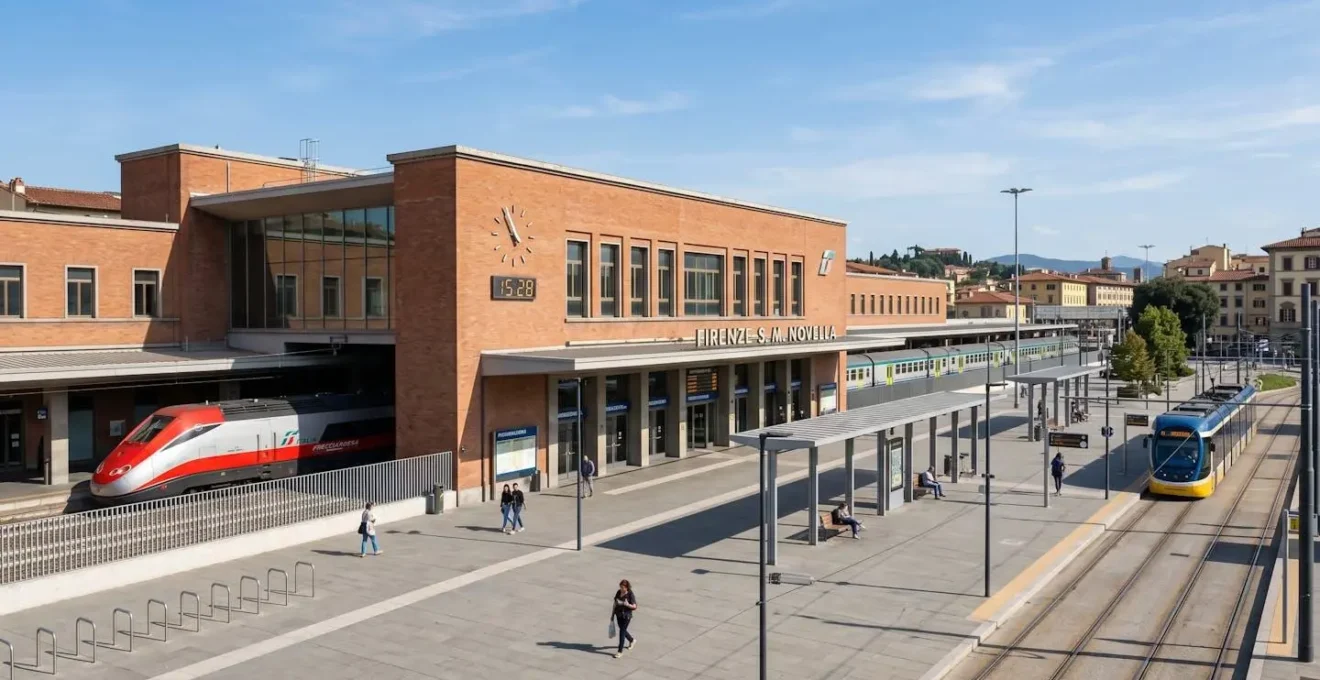
Italy’s state railway operator provides the most established intercity option, with Regionale trains connecting Florence Santa Maria Novella to Pisa Centrale at a fixed fare of 8.90 € per single journey, and Pisa to Lucca at €3.70, as detailed on the Trenitalia Tuscany Line page. These regional services require no advance booking and accept tickets purchased up to departure time, providing spontaneity for travelers with flexible schedules.
The trains run frequently during daytime hours (approximately every 30–60 minutes on major routes), making missed connections less problematic. Seat time between Florence and Pisa averages 50–60 minutes depending on the specific service. The practical challenges emerge around the endpoints. Pisa Centrale sits 1.5 kilometers from the Leaning Tower, requiring either a 20-minute walk or a €12–15 taxi ride with luggage. Lucca’s train station similarly sits outside the walled historic center. For a couple making round trips on both routes over two days, the base train fare totals €25.20, but the realistic all-in cost including station-to-attraction transfers approaches €55–70.
Key advantages include fastest seat time on Florence-Pisa route, high frequency during peak hours with departures every 30–60 minutes, and lowest base ticket cost for single-journey travelers. Main limitations: stations located outside tourist centers requiring taxi or bus for final leg, platform navigation and stair access challenging with heavy luggage, no cultural context or audio commentary, and ticket machines often Italian-only creating language barrier friction.
Self-drive rental options provide maximum route flexibility, enabling detours to countryside wineries, Tuscan hill towns, or less-touristed villages between the major cities. Compact automatic vehicles average €45–70 per day during high season, with fuel costs adding approximately €15–25 for the Florence-Pisa-Lucca circuit based on current Italian petrol prices.
The economic case for cars strengthens with group size. Four adults splitting a €120 two-day rental pay €30 each, undercutting per-person bus pass or train costs. Families with young children benefit from car seat installations and snack/rest stop flexibility unavailable on fixed-route public transit.
The operational complexity, however, escalates significantly. US citizens require an International Driving Permit (IDP) in addition to their domestic license—a $20 document obtainable through AAA before departure, but often overlooked until rental counter rejection. Italian ZTL (Zona a Traffico Limitato) zones in historic city centers impose automated fines of €80–120 for unauthorized vehicle entry. Parking costs vary dramatically, with Florence charging €2–3 per hour in peripheral lots while central garages reach €25–35 for full-day rates. Lucca’s walled center prohibits most vehicle access entirely.
Primary advantages: complete route freedom for countryside villages, wineries, and scenic overlooks; cost-effective for groups of 3–4 adults splitting rental and fuel; maximum luggage capacity and family convenience. Key limitations: highest total cost for couples including rental, fuel, parking, tolls, and IDP; ZTL restricted zones trigger automated fines; parking scarcity and high costs in tourist areas; requires International Driving Permit often overlooked until rental counter. For travelers prioritizing countryside exploration beyond the three primary cities, rental cars justify their complexity. For those focused exclusively on Florence, Pisa, and Lucca’s urban centers, the parking and ZTL headaches outweigh the flexibility benefits. This is precisely the scenario where understanding your bus pass travel companion advantages becomes strategically important.
Organized day tours range from €80–120 per person, translating to €160–240 for a couple. This premium buys complete logistics elimination: no navigation, no ticket purchasing, no parking stress. For travelers who value time over money and prefer guided narration to independent exploration, the convenience premium justifies itself.
Breaking down the real costs (beyond ticket prices)
The advertised price of a transportation option rarely reflects the total financial commitment required to complete a multi-city itinerary. Hidden expenses emerge at three friction points: the «last mile» from transportation terminals to actual attractions, the accumulation of small fees across multiple journeys, and the opportunity cost of time spent navigating logistics rather than sightseeing. Average additional expense beyond base train tickets for the Florence-Pisa-Lucca circuit totals €42 in hidden transfer costs from station taxis, local buses, and platform changes.
For train travelers, the math compounds quickly. Base fares total €25.20 for both passengers (Florence-Pisa round trip: €17.80, Pisa-Lucca round trip: €7.40). Add €24–30 for taxis covering the Pisa Centrale to Leaning Tower legs, plus €8–12 for local buses or taxis in Lucca if staying outside the walled center. The realistic all-in train option lands between €57–67 for two people over two days—significantly higher than the €25 figure cited in budget travel forums that ignore transfer costs.
Multi-day bus pass pricing typically ranges from €70–90 for a 2-day pass covering both travelers, with the advantage of stops positioned at or near major tourist sites. The higher upfront cost eliminates last-mile taxi expenses and simplifies budgeting with a single fixed payment. The crossover point where multi-day passes become economical occurs at the two-city threshold for most itineraries. A single round trip Florence-Pisa via train costs €17.80 for two people plus approximately €24–30 in taxis, totaling €41–47. The moment a traveler adds Lucca to the itinerary, the train cost jumps to €57–67, while the bus pass price remains fixed regardless of how many times you use it across the validity period.
Car rental economics favor larger groups. A €120 two-day rental plus €20 fuel and €15 tolls totals €155 for a party of four, or €38.75 per person. But add €40–50 in parking fees across both days, and the couple’s cost reaches €215, making it the most expensive option for two travelers. The car rental equation flips positive under three conditions: group size of four or more adults, itinerary extending beyond the three primary cities into Tuscan countryside destinations, or travelers with significant mobility limitations requiring door-to-door transportation. Solo travelers or couples visiting only the three urban centers face the worst economics, potentially saving €125+ by choosing trains or €145+ with a bus pass.
Time efficiency: Which option gets you there fastest?
Published timetables and seat-time calculations mislead travelers into optimizing for the wrong variable. The relevant metric is door-to-door elapsed time from hotel departure to attraction arrival, not simply the minutes spent on a train or bus.
For the Florence-to-Pisa Leaning Tower journey, trains win on pure seat time (50–60 minutes) but lose on total logistics time. A typical morning departure at 9:00 AM from a Florence city center hotel follows this timeline: by 9:15 AM train travelers arrive at Florence SMN and navigate to platform, while bus passengers board at a city-center stop. The train departs at 9:28 AM and arrives Pisa Centrale at 10:23 AM. Bus passengers arrive at a Pisa stop near the Leaning Tower area at 10:30 AM and reach the tower by 10:40 AM on foot. Train travelers complete their taxi or walk from Pisa Centrale to the Leaning Tower by 10:50 AM. Direct intercity buses bypass the station-to-attraction transfer by stopping near tourist centers, saving approximately 15–20 minutes door-to-door despite slower highway speeds.
Trains offer frequency advantages with departures every 30–60 minutes that provide flexibility if you miss a scheduled departure. Buses typically run every 90–120 minutes, making missed connections more costly in waiting time. For rigid schedule adherence, buses work well. For «catch the next one» flexibility, trains win. The Pisa-Lucca leg presents different dynamics, with total door-to-door times converging at 45–50 minutes for both options. Car drivers achieve the fastest absolute times on uncongested roads, though the advantage erodes during peak season when highway traffic adds 20–30% to journey times, plus parking search time at each destination.
Your best option based on travel style
The four transportation methods serve distinct traveler profiles with minimal overlap. Matching your priorities to the right option eliminates buyer’s remorse and logistics frustration during the trip itself.
- If you’re visiting all three cities over 2–3 days and value cultural context:
Multi-day bus passes (Tootbus or similar) offer the best balance of cost, convenience, and educational value. The integrated audio guides and Tootwalk pedestrian tours transform transit time into learning experiences, while hop-on flexibility accommodates spontaneous schedule changes. Ideal for first-time Tuscany visitors and budget-conscious couples prioritizing immersive exploration.
- If you’re making a single-day speed run (Florence + Pisa only) and staying near Florence SMN:
Trenitalia regional trains deliver the fastest seat time and highest frequency. The €17.80 round-trip cost for two passengers plus minimal taxi expenses keeps the budget low for single-destination trips. Not ideal for Lucca additions (requires transfer and schedule coordination) or travelers with heavy luggage (platform navigation challenges).
- If you’re traveling as a group of 4+ or need countryside flexibility:
Rental cars become cost-competitive once split among four adults, and provide essential access to Chianti wineries, Volterra, Montepulciano, and other rural destinations unreachable by public transit. Requires International Driving Permit, comfortable navigation skills, and parking budget. Avoid if staying exclusively in Florence-Pisa-Lucca urban centers with ZTL restrictions.
- If you’re a first-time Italy visitor prioritizing zero logistics stress:
Organized day tours charge a premium (€80–120 per person) but eliminate all decision-making: no ticket purchasing, no navigation, no parking, no language barriers. The fixed group itinerary and rigid schedule sacrifice spontaneity for convenience. Best for travelers who value guided expertise and prefer not to research routes independently. For broader context on why hop-on hop-off systems suit first-time European visitors, see our guide on hop-on hop-off bus introduction strategies.
One common mistake highlights the importance of matching transportation to your actual travel style. Consider a couple who selected trains purely on ticket price, only to discover that managing two large suitcases across Florence SMN’s platforms, navigating Italian-only ticket kiosks under time pressure, and budgeting an extra €30 for unexpected taxi rides created more stress than the €15 they saved over a bus pass. The «cheapest» option became the most expensive when factoring in the three hours lost to logistics confusion that could have been spent exploring Lucca’s walls.
Another frequent error involves underestimating ZTL zones and parking requirements. First-time drivers often assume they can park near the Leaning Tower or drive into Lucca’s historic center, discovering only after automated camera enforcement that unauthorized entry triggers €80–120 fines arriving months later. International Driving Permit oversights similarly derail rental plans—AAA offices issue IDPs in 15 minutes for $20, yet travelers regularly arrive at Italian rental counters without this mandatory document, forcing last-minute pivots to more expensive alternatives.
- Download offline maps for Florence, Pisa, and Lucca (Google Maps offline feature) to avoid data roaming charges
- If renting a car: Obtain International Driving Permit from AAA before departure (€20, required at rental counter)
- Check current ZTL zone maps if driving — Florence and Lucca restrict vehicle access in historic centers
Understanding these preparation essentials prevents the scenario where excitement about Tuscan exploration turns into frustration over preventable logistics failures. The traveler who downloads offline maps, secures an IDP in advance, and researches ZTL boundaries spends departure day enjoying cappuccino in Piazza della Signoria rather than troubleshooting rental car rejection or calculating unexpected fine penalties.
Can I use a multi-day bus pass for same-day round trips, or does it only work for one-way journeys?
Multi-day passes activate upon first scan and remain valid for consecutive days (2-day, 3-day, or 5-day options). You can make unlimited round trips during the validity period—morning Florence to Pisa, afternoon return to Florence, next morning Pisa to Lucca, etc. The pass covers all journeys within the route network as long as it remains active. This differs from single-journey tickets, which expire after one use.
Do intercity buses have WiFi and charging ports for devices?
Modern intercity coach services in Tuscany (including Tootbus) typically offer free onboard WiFi and USB charging ports at seats. Trenitalia regional trains have limited or no WiFi on standard Regionale services (WiFi available on higher-tier Freccia trains, which cost significantly more). Bring a portable battery pack as backup, since WiFi performance can degrade with passenger volume during peak tourist season.
Are Florence and Pisa train stations wheelchair accessible?
Florence Santa Maria Novella has elevators and ramps to most platforms, though some tracks require temporary stair navigation during maintenance periods. Pisa Centrale offers accessible routes but with longer walking distances between platforms. Intercity buses provide ground-level boarding with ramps or lifts for wheelchair users, which many travelers with reduced mobility find less stressful than platform navigation. Contact Trenitalia’s «Sala Blu» assistance service 24 hours before travel for guaranteed wheelchair support.
Can I bring large luggage (roller suitcases) on intercity buses and trains?
Both options allow luggage, but buses offer dedicated undercarriage storage compartments accessed at boarding, similar to airport coach services. Trains require you to manage luggage on board—overhead racks accommodate small bags, but large suitcases must stay in vestibule areas or between seats, creating congestion during crowded summer departures. If traveling with more than a carry-on-sized bag, buses reduce the physical lifting and navigation burden considerably.
Transportation decisions made in the calm of pre-trip planning look very different when executed in 95°F Tuscan summer heat with a 40-minute wait for the next connection. The «cheapest» option that saves €15 but adds two hours of logistics stress and platform confusion rarely feels like a victory in the moment. Choose the method that matches your actual tolerance for navigation complexity and schedule rigidity, not just the one with the lowest number on a price comparison chart. The successful multi-city Tuscany trip balances financial efficiency with operational simplicity, recognizing that the best transportation option isn’t always the one with the smallest upfront price tag—it’s the one that maximizes your time exploring medieval piazzas instead of deciphering Italian ticket kiosks.